On Friday, June 26, 2026, President Tinubu the new National Identity Management Commission (NIMC) Act 2026 into law. Members of the administration immediately started celebrating the new law like it鈥檚 the ultimate solution to all of Nigeria鈥檚 insecurity worries. The Minister of Interior, Olubunmi Tunji-Ojo, even called it the 鈥�.鈥�
Here is why they are wrong.
New law, who dis?
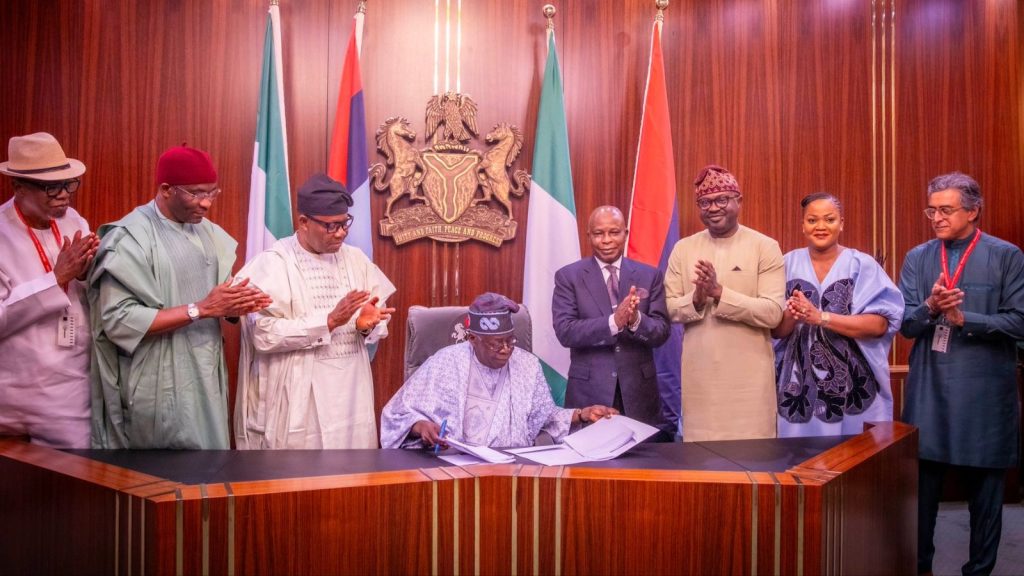
First, what does the 2026 NIMC Act actually do? At its core, the law wants to completely revamp how identity works in Nigeria. Think of it as the government trying to build one master digital foundation for the entire country. Here is what the new law brings to the table:
One ID to rule them all
The biggest goal of the Act is to . No more confusing fragmentation between your National Identification Number (NIN), Bank Verification Number (BVN), driver’s licence, and international passport. Everything will .
Laying down roots
The Act makes the NIMC the 鈥溾�� for Nigeria鈥檚 National Public Key Infrastructure (PKI) and Digital Public Infrastructure (DPI).
Basically, NIMC is now the ultimate boss of identity verification. Every bank, telecom company, and government agency .
You will do jail o!
The law heavy fines (up to 鈧�20 million) and a minimum of five years’ imprisonment for crimes such as identity theft, data breaches, or unauthorised access to the database.
Promises, promises, promises
Here is the thing: Nigeria鈥檚 identity framework was . That was 19 years ago, meaning we were definitely due for an upgrade.
As the Director-General of NIMC, Abisoye Coker-Odusote, , 鈥淣igeria鈥檚 identity management system remained unchanged, while the digital landscape evolved rapidly.鈥� The new NIMC Act looks to close that gap.
But the government is definitely overselling the new framework when it comes to national security.
The Minister of Interior, Olubunmi Tunji-Ojo, the new integrated identity database is already so powerful that it was used just days earlier to arrest seven Boko Haram and ISWAP commanders as they returned to the country from the Holy Pilgrimage.
Senate President Godswill Akpabio added that the arrests were proof that even before the official assent of the law, the system was already working.
The government wants us to believe that the only thing stopping them from ending terrorism before now was a disconnected computer database. But the reality on the ground tells a completely different story.

To get a better sense of why previous identification frameworks failed to address national security鈥攁nd why this new one won鈥檛 either鈥攚e spoke to Kehinde Giwa, a security analyst at .
Call me maybe
Nigerians have been scratching their heads for years now as terrorists continue to negotiate ransom payments over the phone and post videos on social media using mobile devices. Meanwhile, the government has had security-minded identification frameworks in place, like the NIN-SIM linkage system.
If every SIM card is linked to an individual, why hasn鈥檛 the government already tracked and arrested these criminals before now?
Kehinde Giwa identified three reasons.
Fake data & proxies
Many kidnappers use SIMs registered with stolen NINs, dead people鈥檚 NINs, or pay agents to register for them. Once the SIM is active, tracking stops there.
Poor data sharing between agencies
NIMC, telecommunications companies, and security agencies don鈥檛 talk to each other in real time. By the time a number is traced, the line is switched off or swapped.
Weak enforcement
Even when numbers are traced, arrest, prosecution, and conviction rates are low. So criminals keep using phones because the risk is small.
Does the government know me?
Giwa says the government has it all wrong if they think better identification is the problem.
He explained that the insecurity crisis is mainly a failure of intelligence and enforcement, and that countries with even weaker identification systems still arrest kidnappers when the police, intelligence services, and telecom companies work together quickly.
He said that in Nigeria, we often have the number, location data, and suspects鈥� names, but cases stall due to poor investigations, information leaks within security agencies, slow bureaucratic processes for getting warrants, corruption, and a massive lack of trust between different security branches. He described the new identification framework as 鈥渢reating a gun problem with more paperwork.鈥�
This is not a new complaint. Back in 2024, Isa Pantami, who served as Communications Minister in the Muhammadu Buhari administration, that despite all his efforts setting up the NIN-SIM linkage system, law enforcement agencies were not using it.
also revealed that the tracking software used by the police had lapsed its subscription due to funding failures. As a result, the police were entirely dependent on getting tracking information from the DSS, and the resulting bureaucratic delays were more than enough to allow terrorists to keep escaping.
The horrors persist
Giwa explained that identification systems are best for post-incident tracing but won鈥檛 actively stop insecurity if the government does not fund intelligence units, secure our forests and highways, and prosecute cases quickly.
According to him, all better identification will do on its own is 鈥済ive us better records of crimes we still can鈥檛 stop.鈥�
The oversellers
Other security experts have also on the federal government鈥檚 narrative of arresting Boko Haram commanders returning from Hajj.
The group is heavily documented to consider the Saudi government illegitimate and pilgrimage there as sinful according to their own doctrine. Because of this, it seems highly unlikely that seven top commanders would make such a trip.
Whether or not the arrested individuals the database identified as terrorists are actually guilty remains to be seen, but there certainly appear to be massive gaps in the logic of the system.
The main thing is that Nigeria鈥檚 identity framework was long due for an update. It is great that citizens can finally have a single identification number for convenience, if nothing else. But the government’s claim that this framework will solve insecurity is overselling a tool and misleading the public.
A little more honesty would be appreciated. Most importantly, the government needs to do the actual physical work required to fix insecurity, like funding security forces.
After all, what use is it to know the names of all the terrorists in Nigeria if you never actually catch them?
We want to hear about your personal experiences that reflect how politics or public systems affect daily life in Nigeria. Share your story with us 鈥攚e鈥檇 love to hear from you!
罢丑别听聽is returning on August 22, 2026, in Lagos! Come learn from finance experts and industry leaders, and partake in unfiltered conversations about building wealth and diversifying your income stream in a country like Nigeria.聽Real stories, expert advice you can actually use, and a community ready to build wealth together.聽.